01
Walk the yard first
Before we talk size or finish, we look at how the old pad failed, where the roof drains, and which way the yard falls. The patio plan starts with the water, not the concrete.
Most Mesquite backyards still carry the builder's original patio: a thin pad off the back door that has spent fifty summers riding black clay. We pour replacements and extensions with the base work those first pads never got.
Drag the handle to reveal the finished pour.
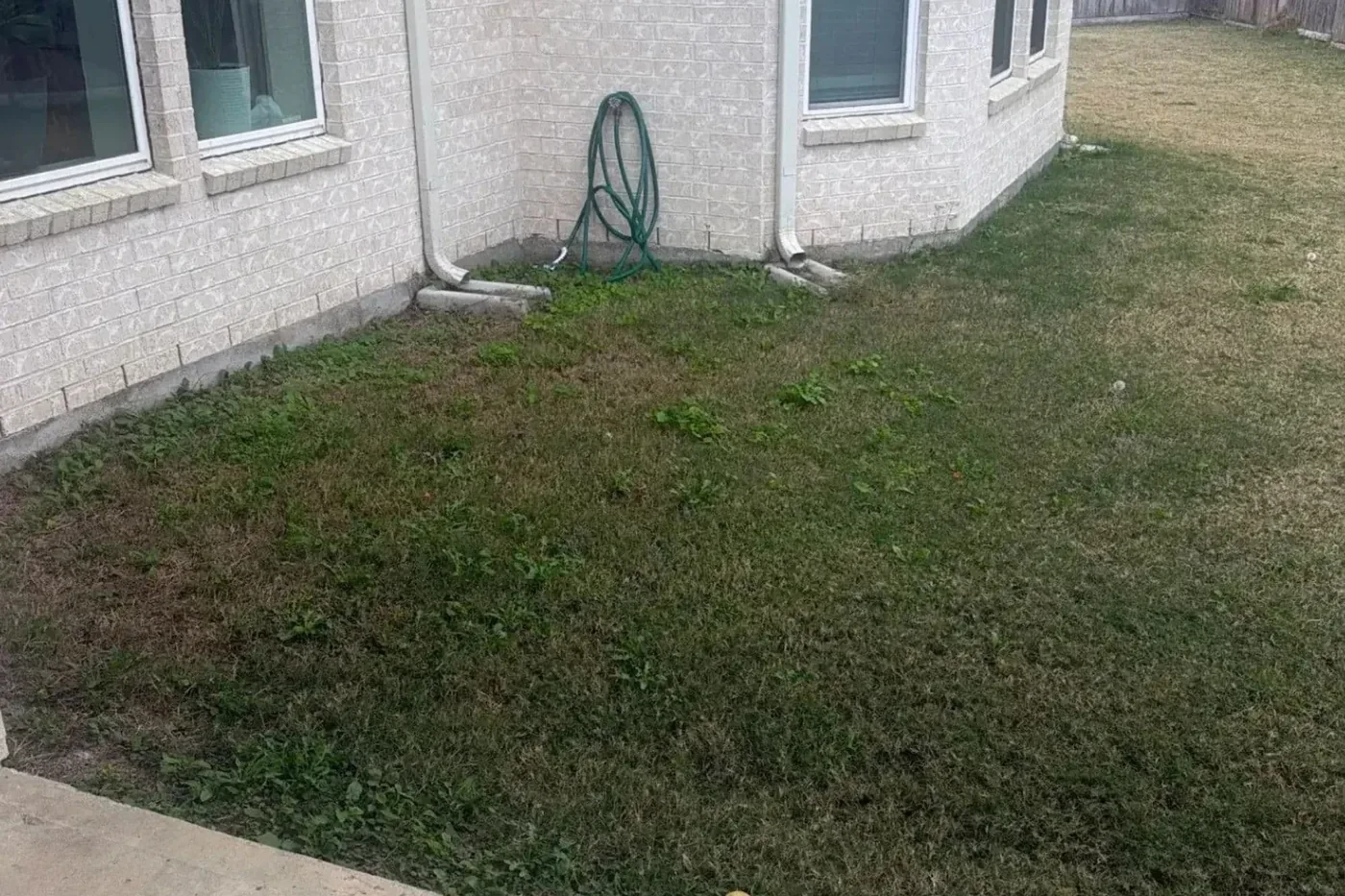
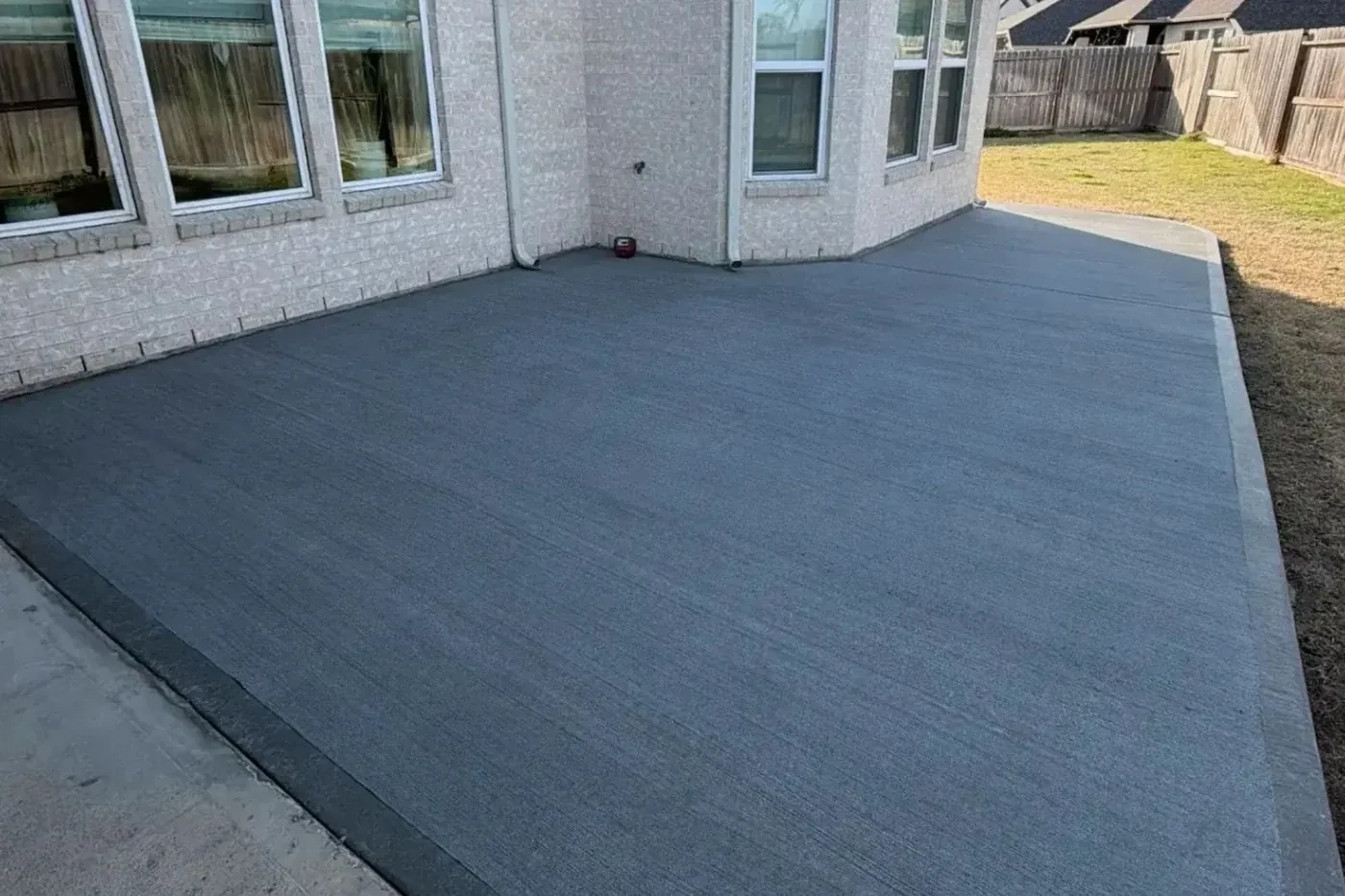
Credibility comes from how it's built, not from promises. Here's the order of operations on every concrete patios job.
Before we talk size or finish, we look at how the old pad failed, where the roof drains, and which way the yard falls. The patio plan starts with the water, not the concrete.
You get a line-item bid covering tear-out, base, steel, and finish, and repair stays on the table when the existing pad is worth saving. Nothing gets added on pour day.
The old patio likely sat on bare soil, so we excavate, compact the subgrade, and place a proper base to spread out the movement Blackland clay dishes out. Steel goes on chairs, not tossed in the mud.
Summer pours start early and cure under control so a 100-degree afternoon cannot flash-dry the surface. Control joints get cut on schedule, not whenever the crew circles back.
We haul off the old concrete, dress the lawn edges, and walk the finished pad with you before calling it done. Care instructions come in writing.
Most contractors vanish after the deposit. We pick up the phone, show up when we say, and stand behind the work after the truck leaves. The follow-through is the difference.
A foreman we know runs your job and a vetted crew does the work, managed by Lucky's, one company accountable from the first call to the final walkthrough.
COI and lien waivers on file before we break ground. The documentation that lets commercial clients pay and gives homeowners peace of mind.
Prepped subgrade, reinforced and mixed to spec for the job, and proper curing. We build credibility through the process, not promises. On concrete patios, that starts with walk the yard first.
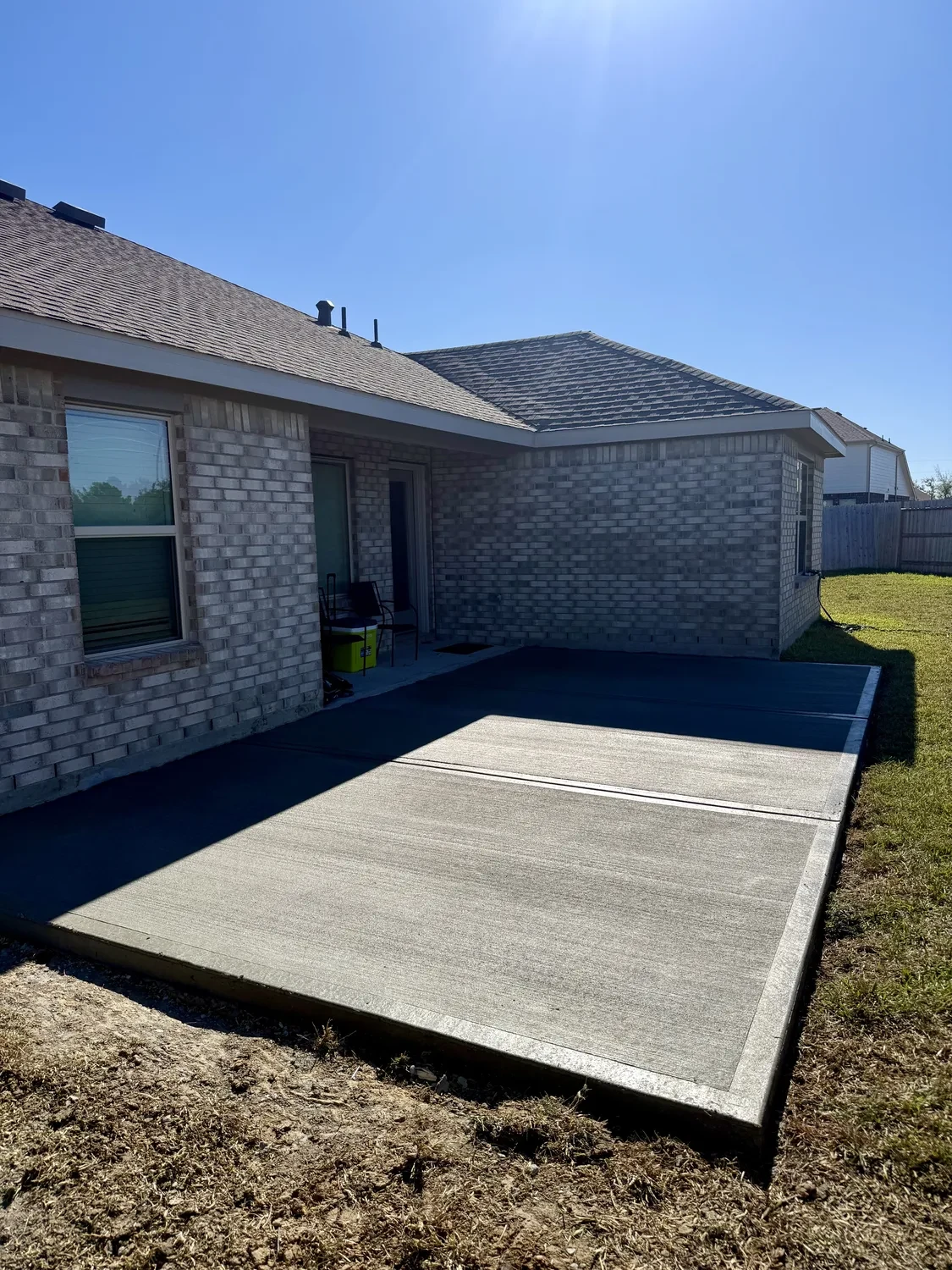
An honest starting range for this part of Texas is $8 to $14 per square foot, with stamped or decorative finishes running higher. Access, tear-out, base depth, and finish all move the number. We price after seeing the site, never a phone number we can't stand behind.
Not always. A pad with one clean crack and no settlement can sometimes be repaired or resurfaced, and if that is the cheaper right answer we will say so. Once the surface has scaled through or the pad has dropped, replacement is usually the money-smart call, and we will show you why on site.
Concrete on expansive clay moves, and anyone who says otherwise is selling something. Compacted base, steel, and a planned joint layout put that movement where we want it, at the joints instead of through the field of the slab. Hairline surface checking can still show up over the years and does not affect the pad's strength.
Usually, yes. We dowel the new section into the old slab so the two act together, and we are upfront that fresh concrete will never perfectly match fifty-year-old gray. Many homeowners pick a clean joint line and matching broom finish so the addition reads as intentional.
It can if we plan for it: thickened edges or footings where posts land, and a slab specified for the extra load. Tell us during the estimate, not after the pour. Cutting footings into a finished patio costs real money.
Tear-out through pour typically runs two to four working days depending on size and access. Plan on keeping foot traffic off for a couple of days and furniture off for about a week while the concrete gains strength. We give exact dates for your pour based on the mix and the weather.
You'll hear back from a real person, usually the same day. No call center, no runaround, no chasing us down.
Booking up fast this season. Or call (469) 429-1660